
Energy Meters
Understanding true energy consumption requires measurement devices that track power flow in both directions, revealing hidden losses and optimizing facility operations. SMTONOFF Energy Meters provide bi-directional measurement through WiFi integration, capturing real-time data on voltage, current, power factor, and accumulated kilowatt-hours with accuracy certified to international standards. Order the best meters online from the official store and gain complete visibility into your electrical system today.
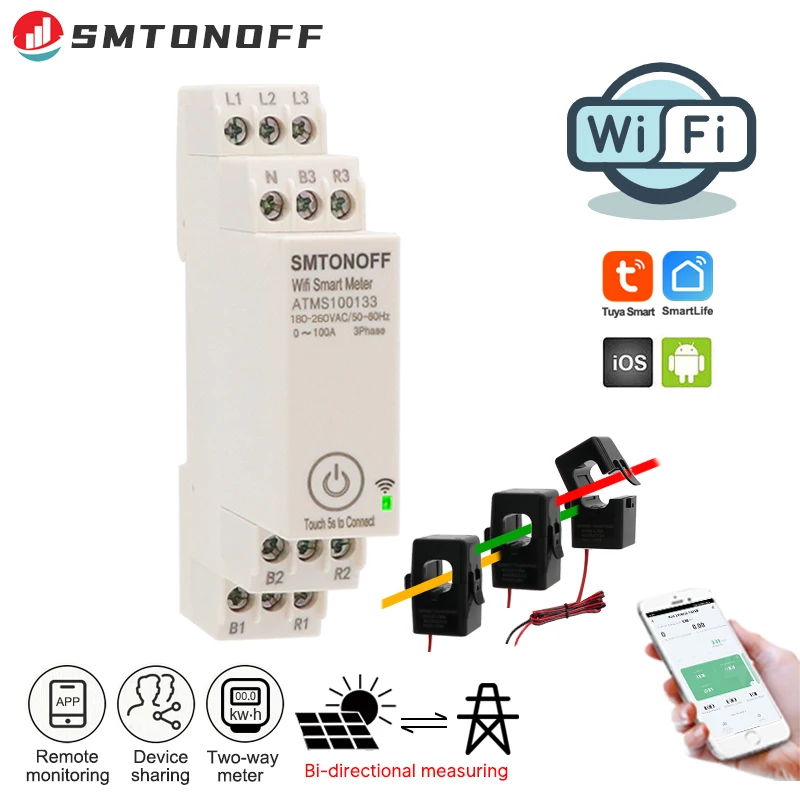
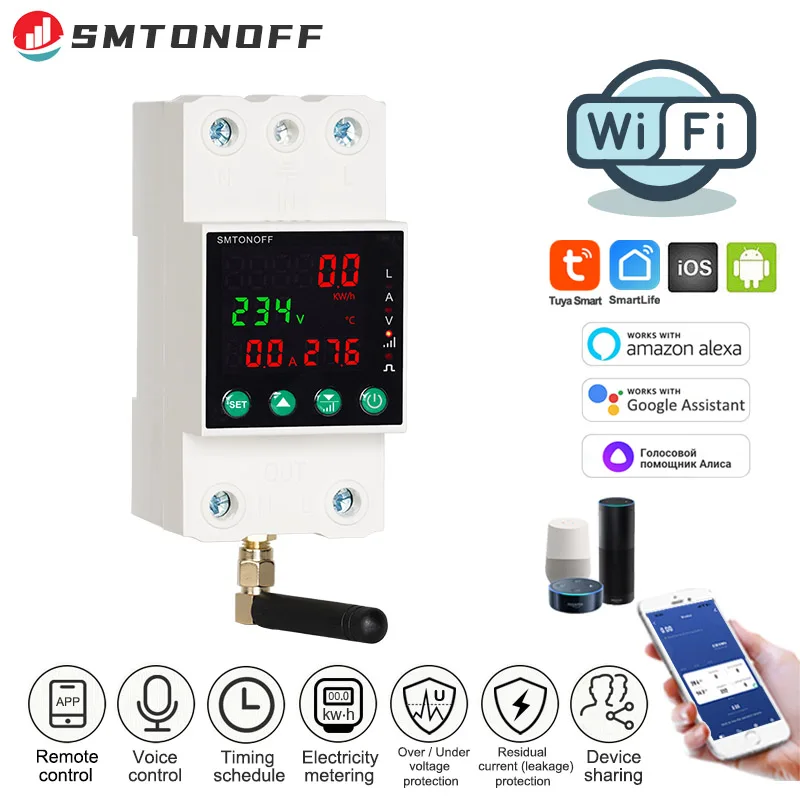


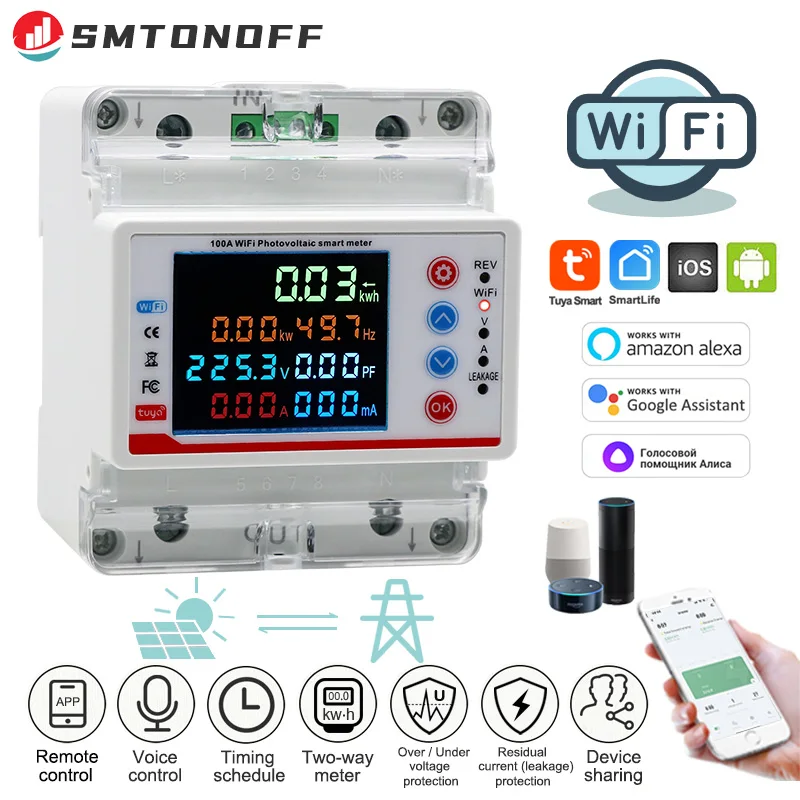

SMTONOFF Energy Meters with Bi-Directional Measurement Capability
SMTONOFF Energy Meters measure electricity consumption and generation simultaneously, distinguishing between power drawn from the grid and surplus energy exported back to utility systems. These WiFi-connected meters serve residential solar installations, micro-grids, and facilities with backup generation, providing accurate accounting for both import and export scenarios. The bi-directional measurement feature tracks net energy flow with precision, eliminating guesswork about whether rooftop panels produce surplus during daylight hours. Tuya and eWeLink compatibility enables automated rules that respond to energy surplus conditions, triggering load shifting or storage charging at optimal times. Installation connects to standard single-phase or three-phase electrical services through current transformer sensing, accommodating service amperage from 40 to 200 amps without requiring panel modifications. Real-time dashboard displays show instantaneous power consumption in watts, voltage stability in the range of plus or minus ten percent, and power factor indicating system efficiency. Accumulated kilowatt-hour readings update every ten seconds, capturing granular data that reveals consumption patterns invisible to monthly utility bills.
Precision Measurement Technology and Data Accuracy
The measurement hardware uses Hall effect current sensors that achieve accuracy within plus or minus one percent across the full load range, meeting international IEC standards for meter certification. Voltage measurement circuits monitor actual grid voltage with resolution to 0.1 volt, alerting users to dangerous fluctuations that damage sensitive electronics or indicate distribution problems. Power factor calculation accounts for reactive power caused by inductive loads like motors and transformers, showing how efficiently the facility converts electrical energy into useful work. Temperature compensation circuits maintain sensor accuracy across ambient conditions from minus ten to plus fifty degrees Celsius, preventing seasonal drift that undermines long-term trend analysis. Data logging stores historical consumption records at five-minute intervals for ninety days, creating a local archive that survives internet outages and cloud service disruptions. WiFi transmission encrypts all meter data using AES-256 security protocols, ensuring that consumption details remain private and protected from unauthorized access. The meters support pulse output generation at rates proportional to consumption, allowing integration with legacy building automation systems that predate cloud connectivity.
Why SMTONOFF Energy Meters Deliver Superior Energy Insights
Traditional mechanical meters read accumulated kilowatt-hours only, providing no visibility into real-time consumption, power quality, or the time-of-use patterns that drive utility bills. Smart meters from utility companies transmit data to companies, not property owners, leaving facility managers blind to consumption during peak pricing windows. SMTONOFF Energy Meters put measurement data directly into user hands, revealing which circuits, equipment, or times of day consume the most electricity and cost the most. Households using SMTONOFF systems reduce consumption by twelve to eighteen percent during year one through behavioral changes based on real-time feedback alone. Three-phase meter models measure individual phase voltage and current independently, diagnosing load imbalances that cause overheating and premature equipment failure on one phase while others run underutilized. Retrofit installation requires no utility company coordination or service interruptions, making meters ideal for retroactively upgrading existing facilities with visibility that prevents costly oversights. The historical logging feature supports detailed trend analysis, showing how consumption evolves seasonally and identifying opportunities for conservation investments with guaranteed payback timelines.
Installation and Optimization Recommendations
Position the meter at the main service entrance or immediately downstream from the utility disconnect to measure total facility consumption before any subcircuits branch away. Current transformers should mount on phase conductors using burden-rated models sized to match the expected load range, avoiding undersized transformers that reduce measurement accuracy at light loads. Tuya automation rules can activate heating, cooling, or water heating during hours when electrical rates drop, shifting consumption away from peak pricing windows and reducing monthly costs by fifteen to thirty percent. Monitor the power factor reading monthly; values below 0.95 indicate excessive reactive power from industrial equipment, suggesting installation of power factor correction capacitors to improve efficiency. Order online from the official SMTONOFF store to access technical guides covering your specific service type, receive professional installation recommendations, and qualify for a five-year manufacturer warranty. Verify accuracy after installation by comparing meter readings against utility bills over three consecutive months, confirming that the device reflects actual consumption within one percent. Use the data export feature monthly to create spreadsheets tracking consumption trends, identifying seasonal patterns, and forecasting future energy needs based on facility growth.